


With 2026 in full swing, the nature-based solutions industry stands at an inflection point. GreenVest is on the cutting edge and ready to support what the future brings. Global investments in nature-based solutions for water security alone have doubled over the past decade to $49 billion, and the market is poised for continued growth.
Here are five trends expected to shape our industry in 2026.
1. Waters of the U.S. (WOTUS) Redefinition Takes Effect
The proposed WOTUS rule published in November 2025 narrows federal jurisdiction to wetlands with continuous surface connections to navigable waters. With nationwide permits expiring in March 2026, this regulatory shift will reshape how mitigation projects are structured.
What it means for you: As oversight shifts from the federal to state level, understanding your state’s wetland regulations becomes critical. GreenVest’s expertise in Mid-Atlantic and Northeastern regulatory frameworks positions us to navigate these changes seamlessly.
2. Infrastructure Funding Enters Final Year
The Bipartisan Infrastructure Law authorized $2.1 billion for ecosystem restoration through FY 2026. National Oceanic and Atmospheric Administration (NOAA) has already funded over $985 million in habitat restoration awards, with $100 million still available for transformational coastal resilience projects. One transformative project funded through the program is GV’s Middle Branch Resiliency Initiative: Patapsco Delta East, which completed construction in Fall 2025.
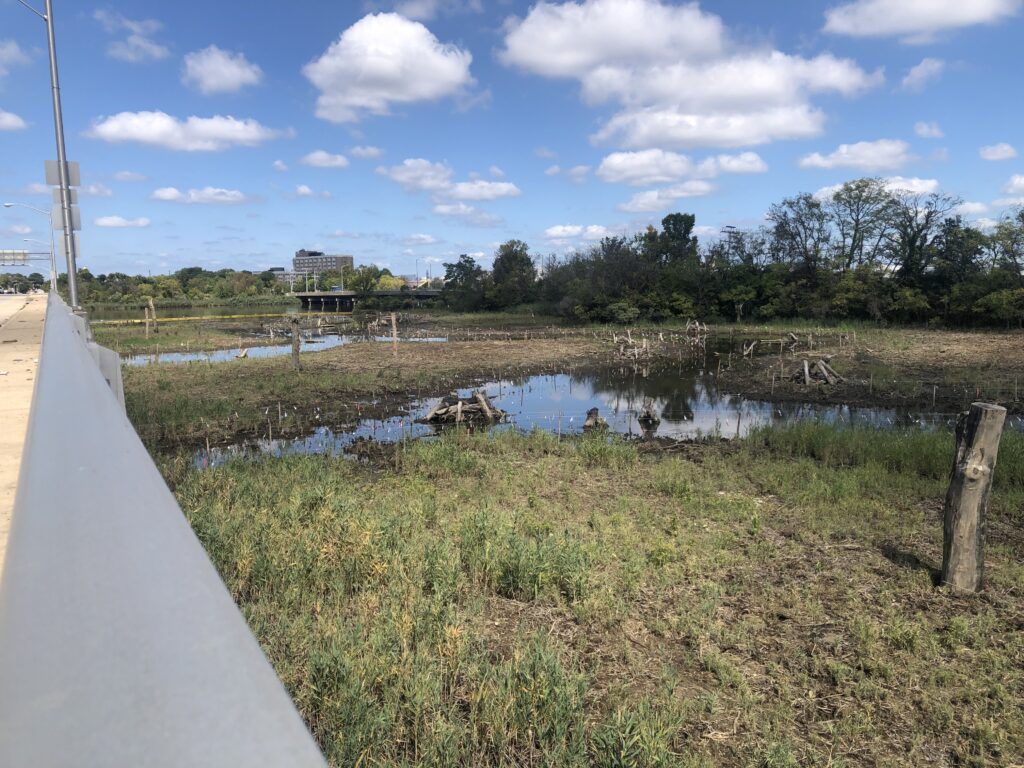
What it means for you: 2026 represents the last window to leverage federal restoration funding under current authorizations, including grant programs facilitated by National Fish and Wildlife Foundation and NOAA. Reauthorization discussions will shape the next decade of investment.
3. Carbon & Biodiversity Markets Mature
The voluntary carbon market is projected to grow at a 25-40% compound annual rate through 2035, with forestry and land-use projects commanding nearly half the market. Meanwhile, biodiversity credits are gaining traction as companies seek measurable nature-positive outcomes beyond carbon.
What it means for you: Projects that combine environmental asset types such as carbon, biodiversity, and water quality promote significant resilience. Our restoration work goes beyond crediting to generate and prioritize these co-benefits. For example, if a project’s primary goal is water quality improvements, GV works to simultaneously address additional challenges, such as flood risk, degraded wildlife habitat, and public safety concerns. Our team also leverages the use of on-site material whenever possible, promoting a reduced carbon footprint for project implementation.
4. State-Level Innovation Accelerates
States are pioneering new funding mechanisms. Maryland’s Whole Watershed Act introduces a new collaborative framework for watershed-scale implementation, while the Conservation Finance Act promoted pay-for-performance contracts for environmental outcomes. New York’s Climate Change Superfund Act has established a cost recovery program, requiring significant greenhouse gas contributors to partially fund resilient infrastructure investments. Meanwhile, Save the Sound in Connecticut is advocating for legislature to support climate resilience projects such as living shorelines, taking inspiration from initiatives in neighboring states.
What it means for you: Innovation is happening at the state level. GreenVest’s strong relationships with regulators across our project areas help us identify and leverage emerging opportunities, while advocating for policies that will support our mission: restoring and conserving the environment not only to improve habitat and water quality, but quality of life.
5. Regulations & Monitoring Standards Tighten
The 2025 Nature-based Solutions (NBS) Policy Tracker shows that references to Monitoring, Reporting, and Verification have doubled since 2024, increasing accountability for environmental success across the study’s 190 countries. Here in the US, regulatory requirements for NBS change periodically across the local, state, and federal agencies, such as increases to the minimum monitoring period for stream and floodplain restoration projects under the Whole Watershed Act and the upcoming updates to Maryland’s Nontidal Wetland Regulations. This requires firms to continually track these standards and ensure that projects continue to function as intended while complying with applicable guidance through the maintenance and monitoring period.
What it means for you: Regulatory familiarity and rigorous monitoring isn’t just compliance; it’s the right thing to do. GreenVest staff stays involved in various local, regional, and national professional groups—like the Chesapeake Watershed Restoration Professionals and Ecological Restoration Business Association—to help shape legislation and stay knowledgeable on anticipated regulatory changes across the industry. At the project scale, GreenVest’s integrated design-build approach includes cross-jurisdictional collaboration, regulatory consensus, long-term monitoring, and adaptive management to support project sustainability and prolonged ecological function.
Looking Ahead
2026 will test our industry’s ability to adapt to shifting federal priorities while capitalizing on state-level innovation and maturing private markets. At GreenVest, our fixed-price, full-delivery model is designed precisely for this environment; we assume financial liability and performance-based risk so our clients can focus on their core business.
Ready to discuss how these trends affect your project? Contact us at action@greenvestus.com or call 410-987-5500 to discuss your project.